Crafted by Headout, a global experiences brand offering curated tours, tickets & experiences. Discover with ease, book with peace.
How Headout makes choosing experiences effortless
We curate the best ways to experience
We research and organise all unique experiences - from tickets to tours to special combos - so you get all the choices without the clutter.
We partner with the best
Every supplier is vetted for quality, reliability, and value so you only get top rated experiences. No surprises, no disappointments.
All the best options, in one place
Each experience is thoughtfully organised to give you maximum availability, great value and an easy way to choose.
Book with complete peace of mind
Free cancellations, Flexible payments, and 24/7 support - thoughtfully designed for flexibility, assurance, and total peace of mind.
1/4
Slide 1 of 4
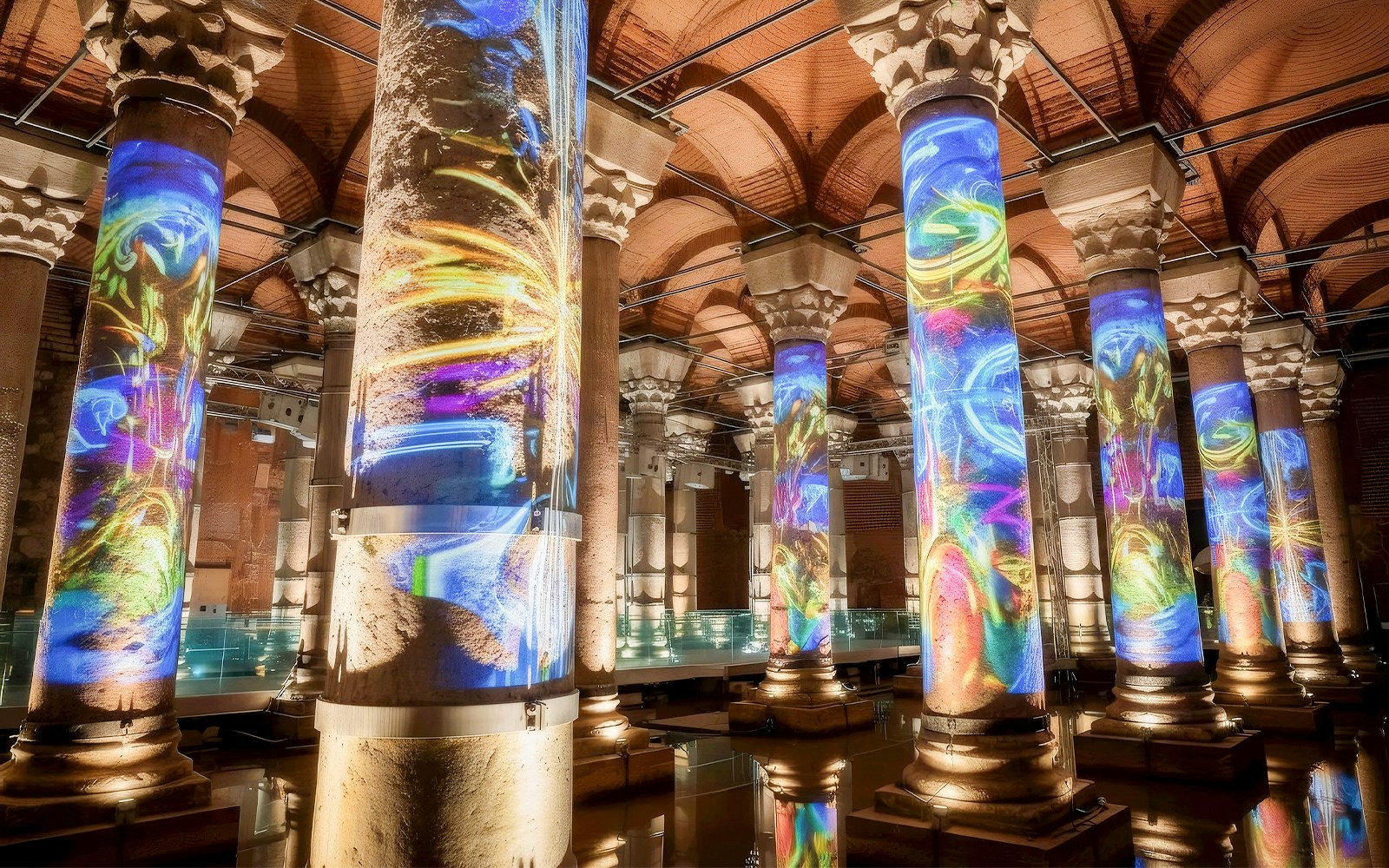
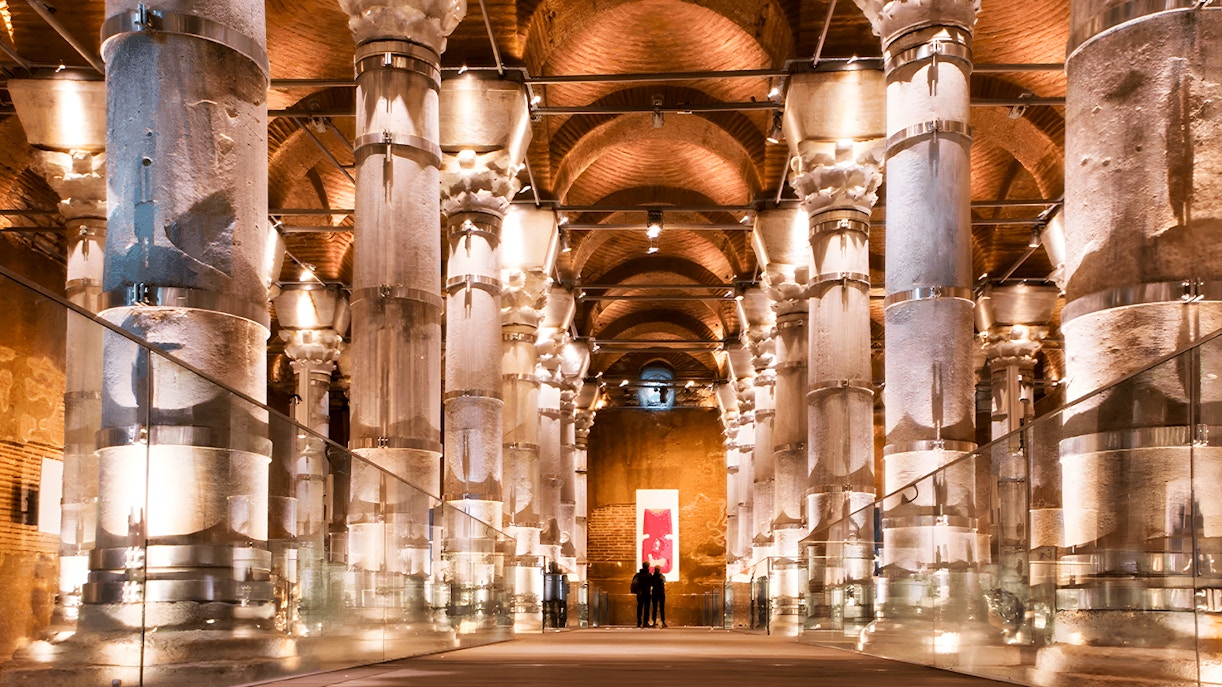
Beneath the bustling streets of Istanbul lies the Theodosius Cistern (also known as the Şerefiye Cistern) a 5th-century Byzantine water reservoir built during the reign of Emperor Theodosius II. Once an essential part of Constantinople’s water network, this 1600-year-old cistern stored supplies from the Valens Aqueduct to serve palaces, baths, and fountains across the city. Forgotten for centuries and rediscovered only in 2010, this chamber houses 32 well-preserved marble columns, soaring brick vaults, and hosts immersive 360° light shows. Here’s more on the story of this hidden cistern and how its purpose has been reimagined for today’s visitors.
What to expect at the Cistern of Theodosius
Whether you’re fascinated by Byzantine engineering or not, the Theodosius Cistern is a must-visit if you are a traveler seeking a unique experience away from the hustle and bustle of Istanbul.
Architecture
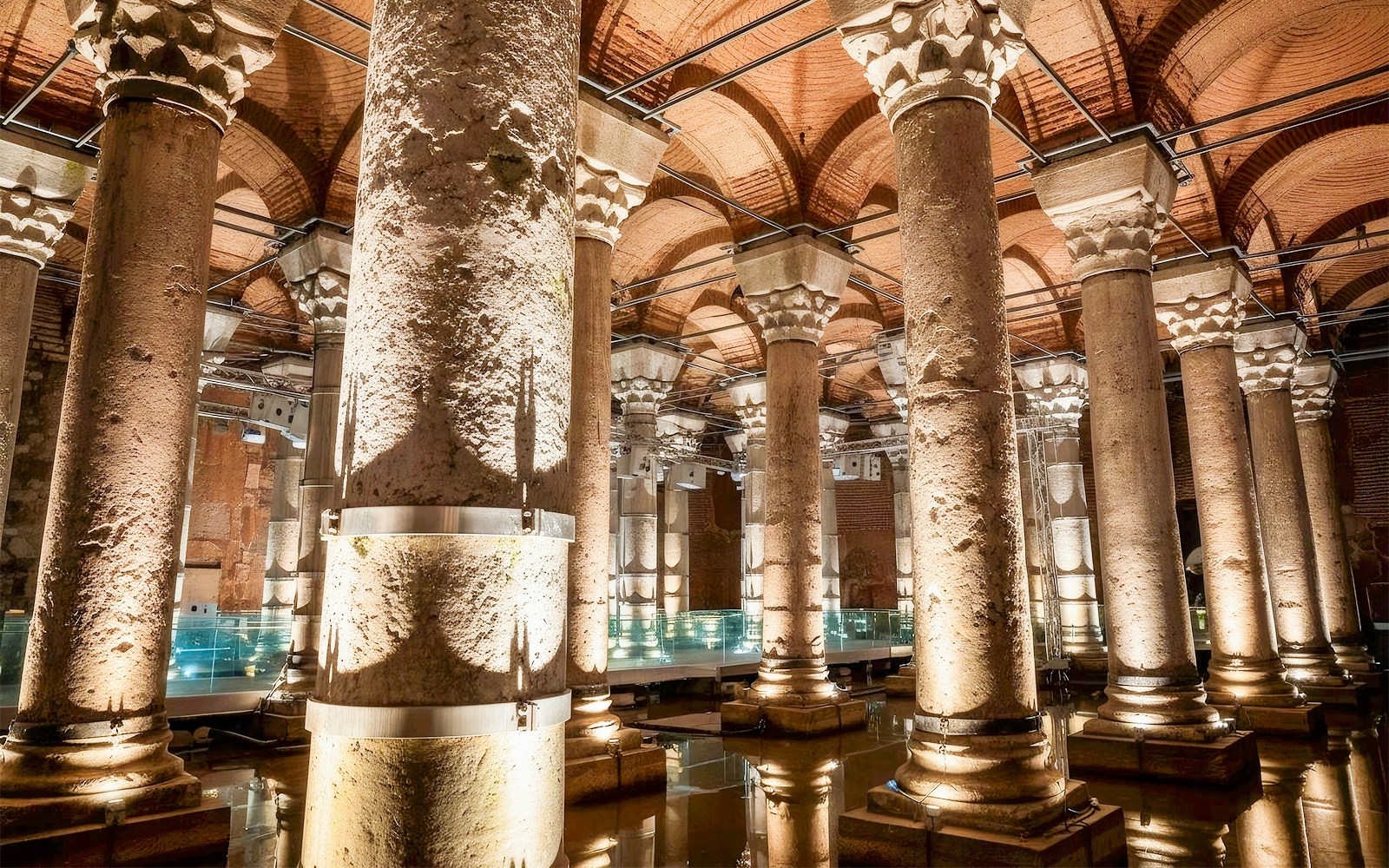
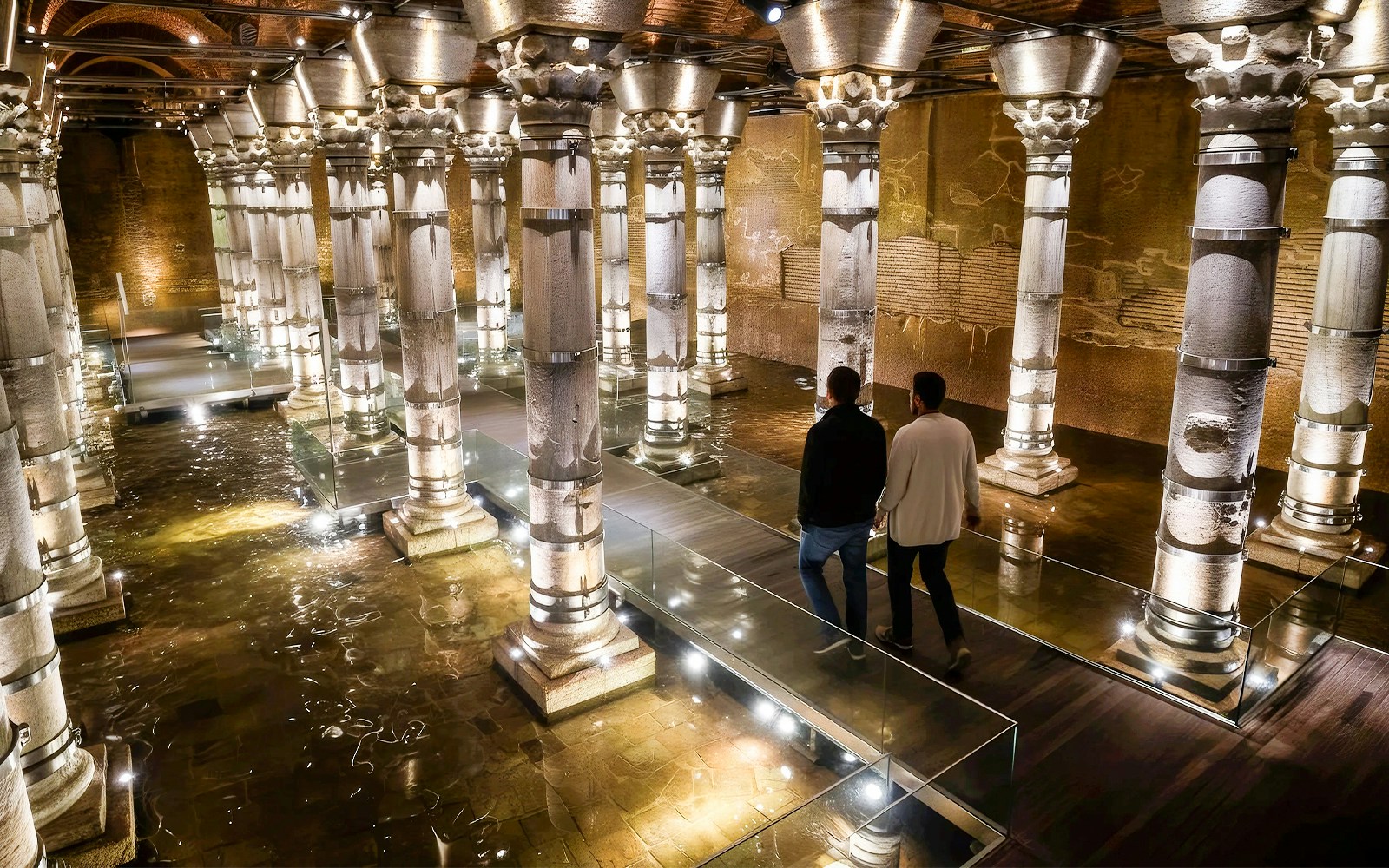
This rectangular reservoir spans roughly 24 × 40 meters and rises to 11 meters, supported by 32 marble columns topped with ornate Corinthian capitals. The perimeter walls are over 2–2.5 meters thick, with curved corners and waterproof plaster designed to endure immense water pressure.
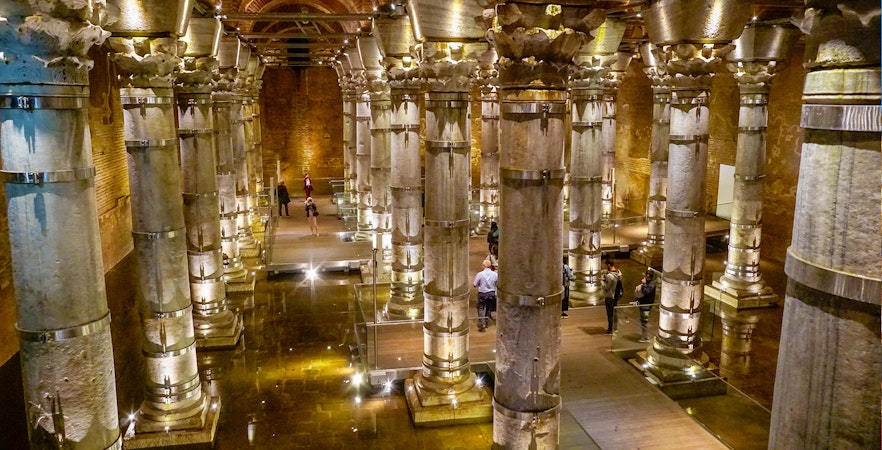
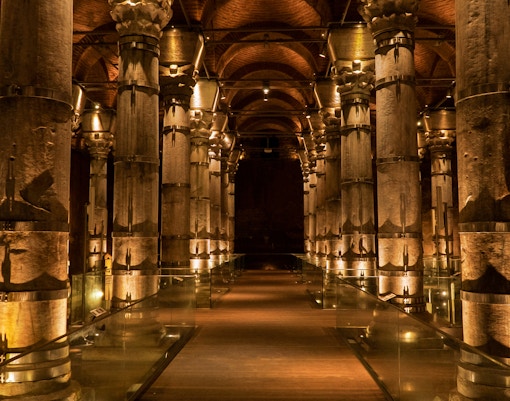
32 marble columns and vaulted ceilings
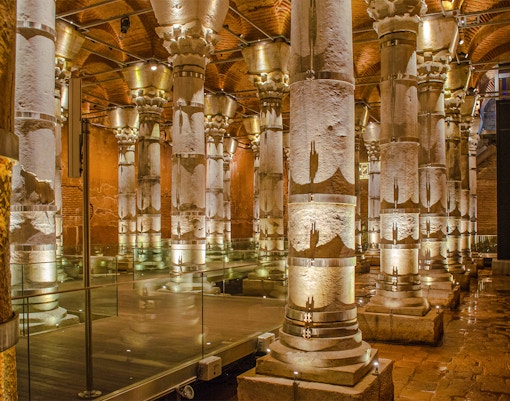
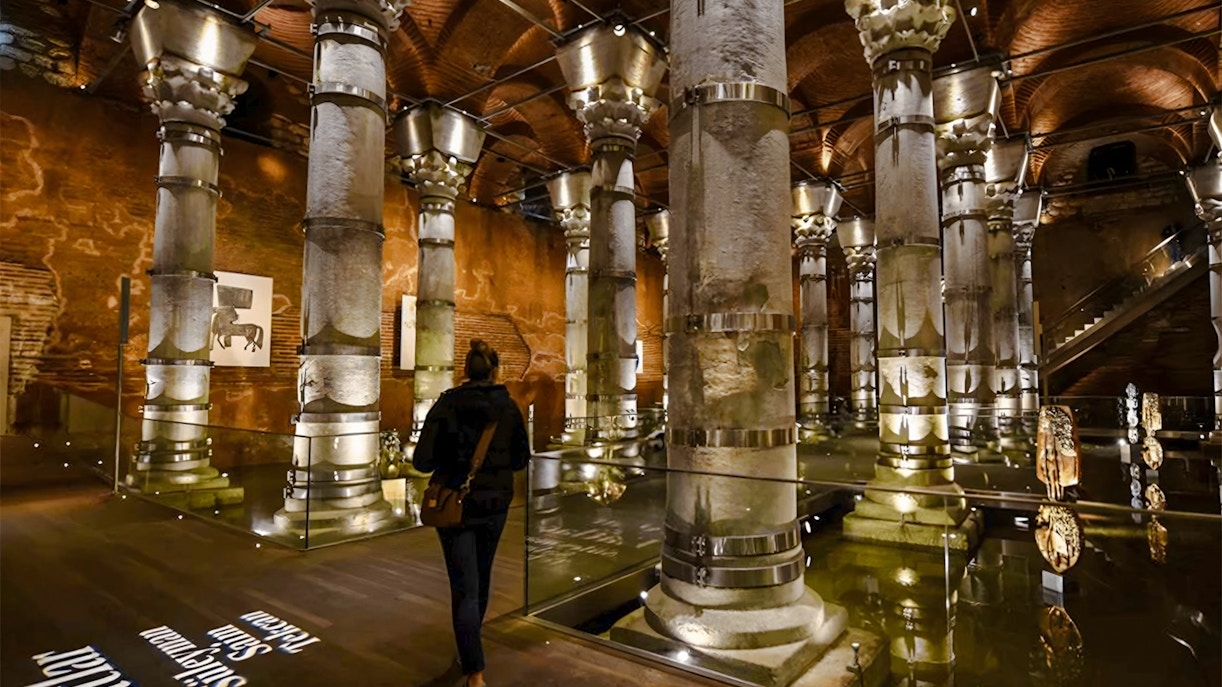
Theodosius Cistern features 32 towering marble columns, each over 1500-years-old and around 9 meters tall, topped with intricately carved Corinthian-style capitals. These columns support brick arches and vaulted ceilings, showcasing the precision of ancient Byzantine engineering. The shallow water at the base reflects both the columns and arches, creating a mirror-like effect that offers a glimpse into the city’s late Roman water storage design.
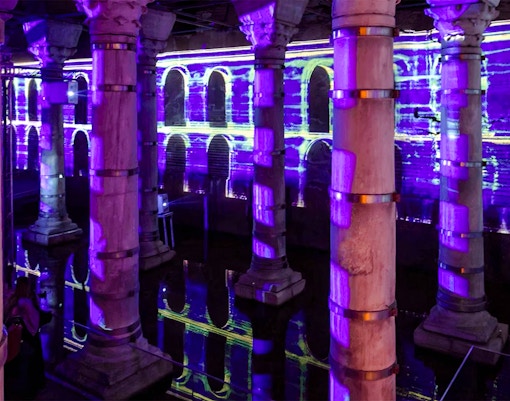
Immersive 360° projection light show
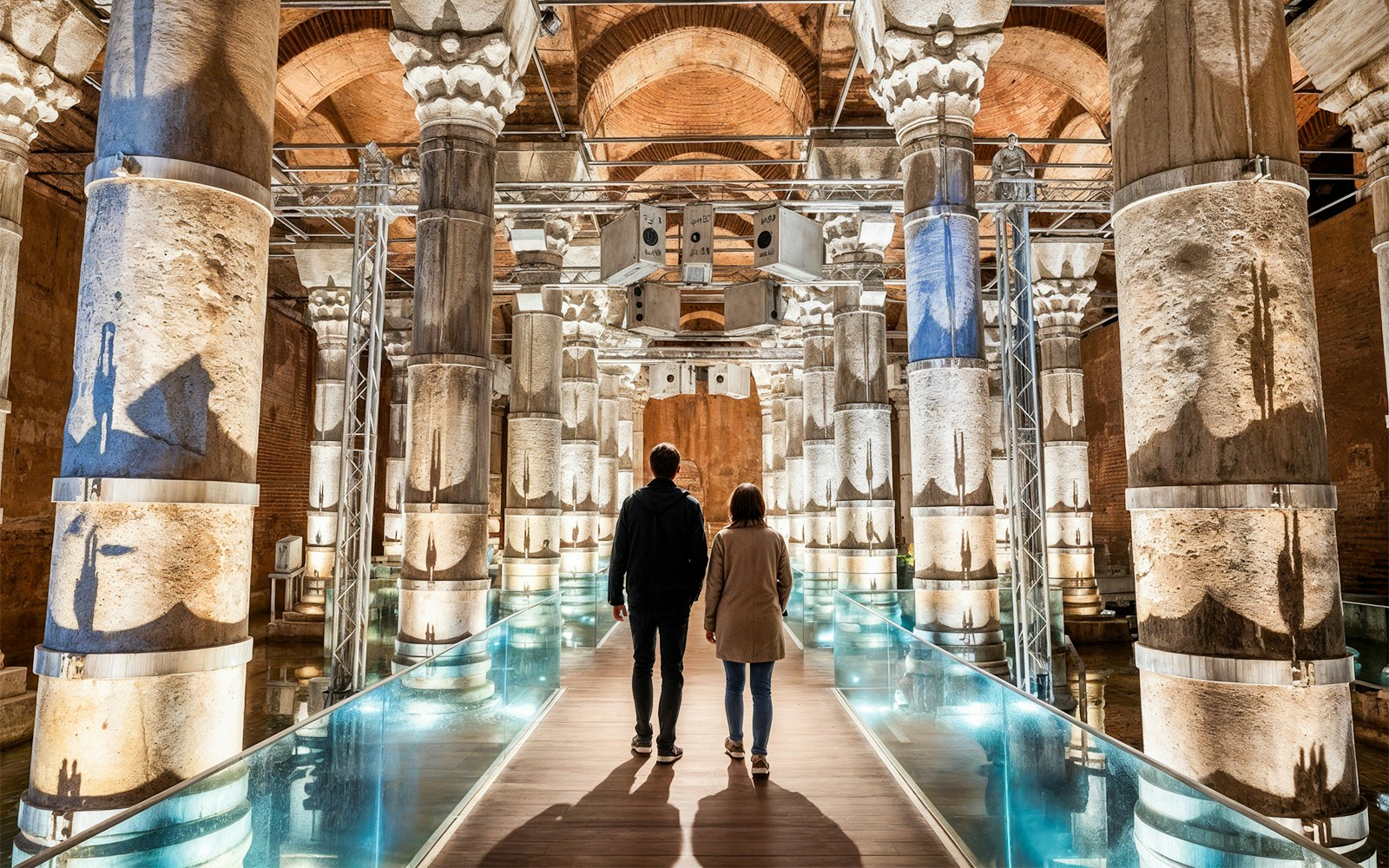
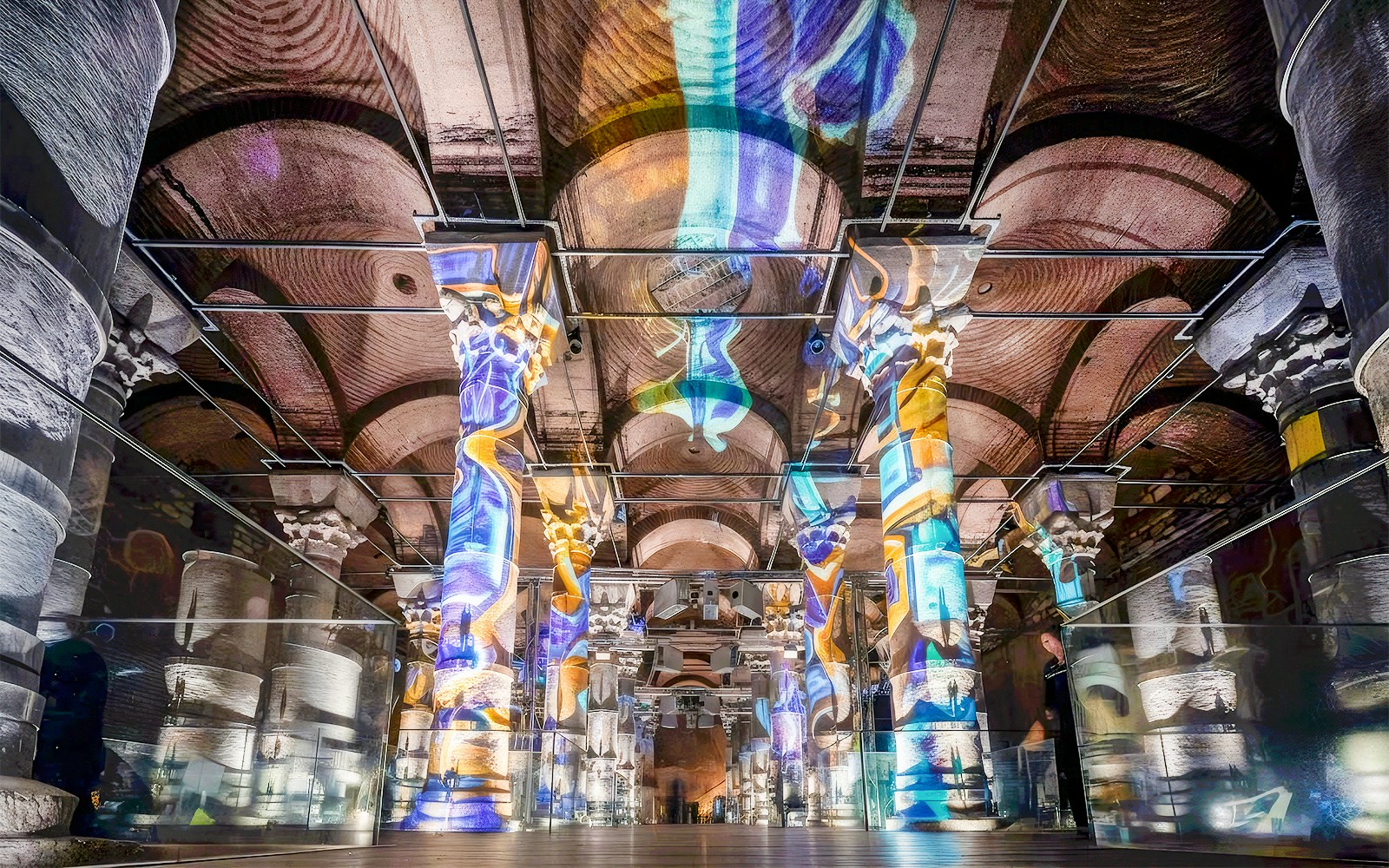
The cistern offers an hourly 360-degree immersive projection show. With synchronized lighting effects, high-definition visuals, and a cinematic soundtrack, this experience transforms the ancient Byzantine water reservoir into a living storytelling venue. Visitors can watch Istanbul’s history unfold from its Byzantine Empire origins to the grandeur of the Ottoman Golden age and into its current modern identity.
Cultural events
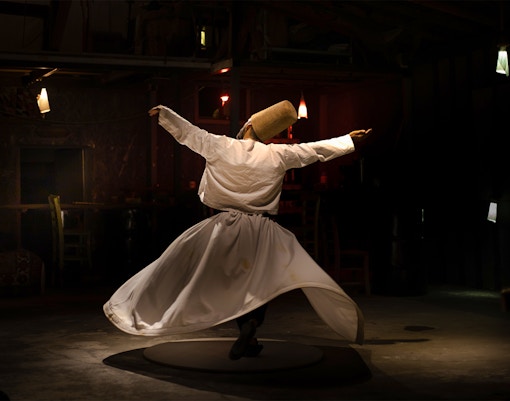
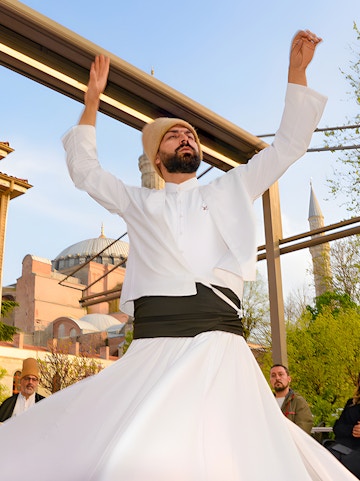
Beyond its marble columns and vaulted ceilings, the Theodosius Cistern has become a top cultural venue in Istanbul’s historic district. The echo-filled chambers host a variety of events such as classical music concerts, whirling dervish performances, and contemporary art exhibitions. Each event uses the interplay of light, shadow, and sound to create an unforgettable fusion of history, architecture, and culture, making it one of the most unique attractions in Istanbul.
Your Theodosius Cistern tickets explained
Entry tickets
Best for: Travelers who want to explore the Theodosius Cistern at their own pace.
Explore the 1,600-year-old Theodosius Cistern at your own pace as you stand beneath its towering marble columns and gaze at the waters below.
Listen to its history through an audio guide, then watch the hourly 360° light show transform the space into a living artwork.
Best for: First-time visitors or those short on time who want to experience both the Theodosius Cistern and Hagia Sophia in one day.
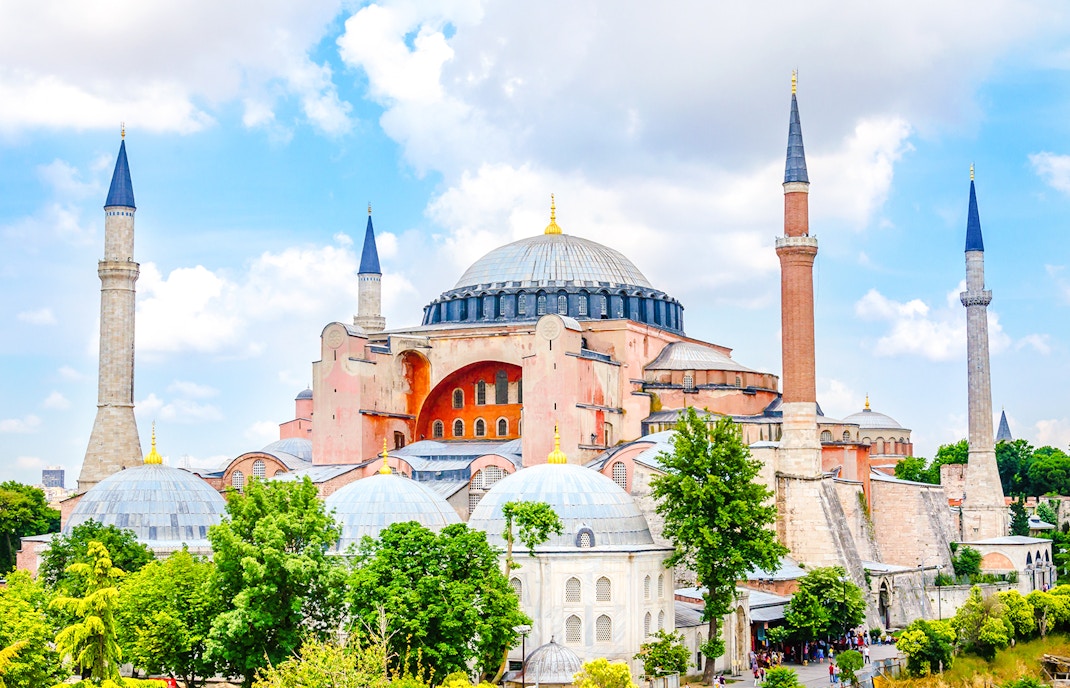
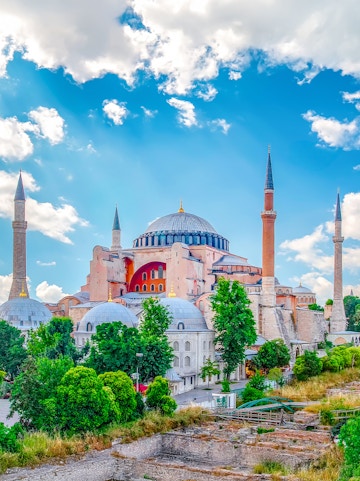
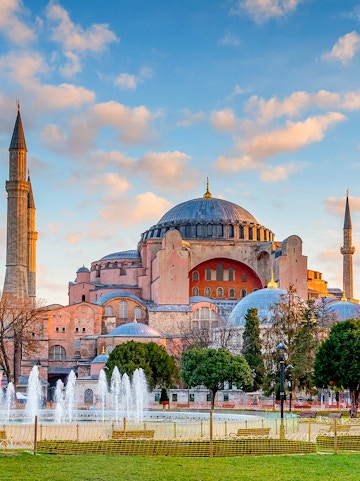
Enjoy skip-the-line entry to the Theodosius Cistern and visit Hagia Sophia, covering two of Istanbul’s most iconic landmarks in one day.
See the cistern's much-talked-about 360° light show, then step into the daylight to take in Hagia Sophia’s dome, golden mosaics, and Ottoman calligraphy.
Why should you visit the Theodosius cistern in Istanbul?
1/3
Top notch preservation
It is one of the city’s best-preserved Byzantine water reservoirs. You get to walk into history surrounded by 32 original marble columns and vaulted brick ceilings showcasing ancient engineering.
Intimate experience
Theodosius Cistern attracts fewer crowds, making it perfect for those who want to appreciate history in a calm and contemplative setting. The experience you get is quieter and more intimate compared to the popular Basilica Cistern, ideal for peaceful cultural exploration.
360° light show and cultural events
The cistern hosts frequent on-site experiences, including a state-of-the-art 360° projection light show that vividly brings Istanbul’s layered history to life. Blending cutting-edge technology with ancient heritage, the show depicts stories of the city, the cistern, and its past. The space also serves as a cultural venue, with rotating art exhibitions, live traditional performances, contemporary works, and Sufi music events that enrich the visit beyond historical sightseeing.
Difference between Basilica Cistern and Cistern of Theodosius
Of the many cisterns hidden beneath Istanbul’s bustling streets, the Basilica Cistern and the Theodosius Cistern stand out. Both showcase Byzantine engineering marvels and the city’s ancient water supply system, yet each offers a distinct visitor experience. Here’s how they differ from each other:
Age & construction: The Basilica Cistern was built in the 6th century (532 AD) under Emperor Justinian I, whereas the Theodosius Cistern was built earlier, in the 5th century (428–443 AD) under Emperor Theodosius II.
Purpose: The Basilica Cistern supplied water to the Great Palace, while the Theodosius Cistern primarily stored water brought by the Valens Aqueduct.
Size & capacity: The Basilica Cistern is monumental, about 140 x 70 meters, holding roughly 80,000 m³ of water, whereas the Theodosius Cistern is smaller and more compact, measuring roughly 41.3 x 23.75 meters.
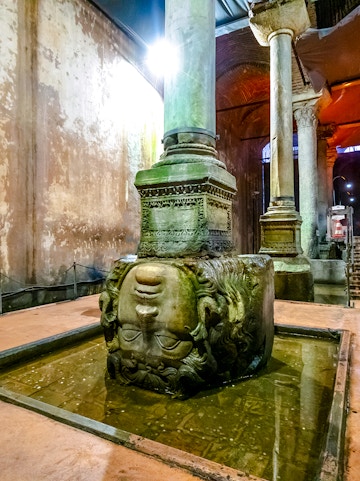
Columns & design: A striking element of the Basilica Cistern is its 336 marble columns, including the famous inverted Medusa heads. The Theodosius Cistern houses 32 marble columns with elegant Corinthian capitals.
Discovery & public access: The Basilica Cistern has been known for centuries and opened in 1987 after renovations, which continued until 2022. The Theodosius Cistern was rediscovered relatively recently, in 2010, and restored and reopened in 2018.
Signature attraction: The Basilica Cistern’s most intriguing mystery is its inverted Medusa heads, the origin of which remains unknown, while the Theodosius Cistern’s highlight is the famous 360° projection mapping show with immersive light and history effects.
History and significance of the Cistern of Theodosius
1/2
History
The Cistern of Theodosius was constructed between 428 and 443 AD to store water supplied by the Valens Aqueduct. This aqueduct, completed in 378 AD under Emperor Valens, was the backbone of Constantinople’s water supply system, channeling fresh water from springs in the Thracian hinterland through a network of bridges, tunnels, and channels.
Theodosius Cistern’s role in this system was to act as a storage and distribution hub during dry seasons, public festivals or sieges when water access could be cut off. For years, it ensured a stable water supply to imperial and public buildings such as the Great Palace, Nymphaeum, and Baths of Zeuxippus.
Significance
In its prime, the Theodosius Cistern was vital for sustaining daily life and also for supporting trade and commerce in Constantinople. By supplying water to public baths, fountains, and palatial complexes, it fueled the city’s social and economic activity.
Though overshadowed by the nearby Basilica Cistern, the Theodosius Cistern has quickly established itself as a coveted alternative in Istanbul’s modern touristic scene, offering a quieter, more contemplative experience. It retains still water, grand marble columns, vaulted ceilings, but with fewer crowds and a softer, meditative charm. Today, it is the world’s oldest structure equipped with integrated 360° projection mapping, transforming its interior into a vibrant stage for immersive art and history presentations.
Plan your visit to the Cistern of Theodosius
The Cistern of Theodosius is open daily from 9am to 7pm, with the last entry 1 hour before closing.
Plan to spend 1 to 1.5 hours here, with enough time to explore the ancient architecture and enjoy the immersive 360° projection light show.
Weekdays: Any day from Monday to Friday offers a quieter, more reflective atmosphere, ideal for visitors who appreciate space to pause and observe.
Weekends: Tend to be busier, especially during cultural events. Arriving just before opening (9am) gives you the best chance to skip long lines and enjoy the cistern in a calmer setting.
Peak season vs Low season
Peak season (June to October): Expect longer days, frequent cultural events, and higher foot traffic. Advance booking is strongly recommended.
Low season (November to March): Fewer visitors and a slower pace make for a more tranquil visit. The cistern is sheltered from the weather, so even rainy days are enjoyable.
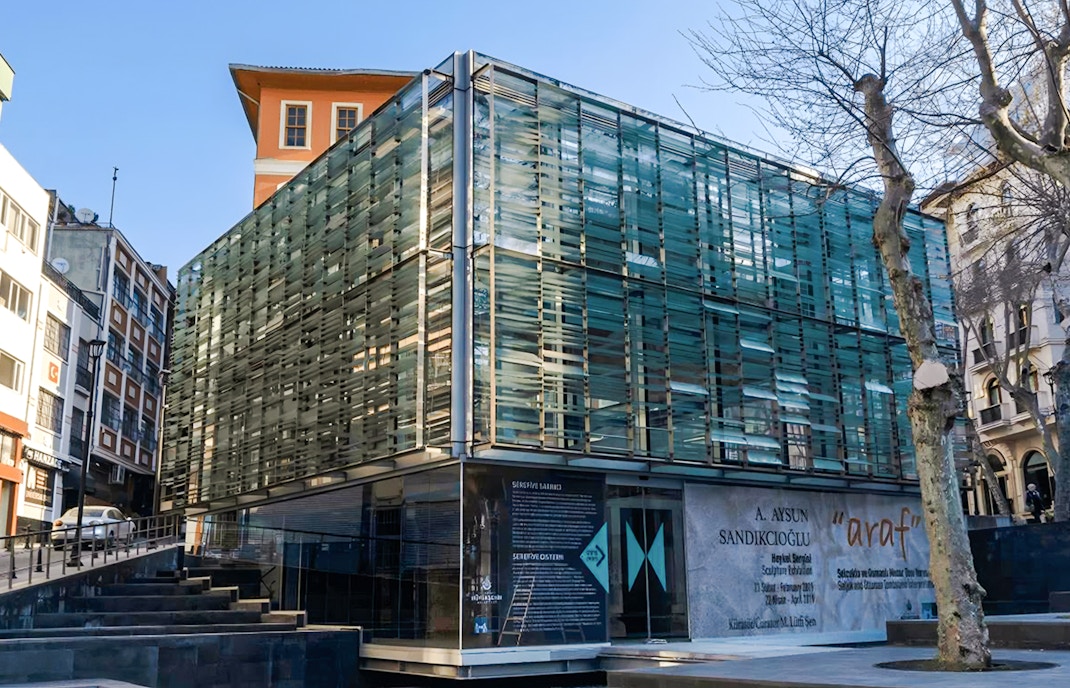
The cistern stands along Piyer Loti Street, a route lined with small shops and traditional buildings. The entrance is easy to spot thanks to its modern glass pavilion structure, which contrasts with the ancient stonework hidden below.
By tram: Take the T1 line to Çemberlitaş or Sultanahmet stations. Both are within a 5-10 minute walk to the entrance.
By taxi or car: Taxis are convenient, though parking in Sultanahmet is limited. Drop-offs near Piyer Loti Caddesi are recommended.
Entrances & accessibility
Main entrance: A modern glass pavilion on Piyer Loti Caddesi marks the entry, offering a striking contrast to the historic streets outside.
Accessibility: The site is not known to be entirely wheelchair friendly. Make sure you check the official website of the attraction before booking your tickets.
Arrive within the first hour of opening for the calmest experience and unobstructed photos.
The Cistern is within walking distance of other famous Istanbul landmarks like the Grand Bazaar and Suleymaniye Mosque, making it easy to combine your visit with other sightseeing.
It is recommended to book tickets online at least two weeks in advance, especially during high season, to secure entry and avoid long wait lines.
Wear comfortable, non-slip shoes. The original stone flooring can be slightly uneven.
Allow extra time if you intend on visiting during special performances. Seating is normally based on a first-come, first-served basis.
Flash photography is prohibited to protect both the structure and the ambiance.
Food and drinks are not permitted.
Do not touch the ancient columns or capitals.
Keep your voices low as the acoustics carry sound throughout the hall.
Tripods, selfie sticks, and large bags may need to be checked at the cloakroom.
Frequently asked questions about the Cistern of Theodosius
This cistern stands out due to its rich history and stunning preservation of Byzantine engineering, paired with a refreshing contemporary twist. There are also several live events conducted at the cistern like a 360° projection light show and performances by whirling dervishes, making it both an architectural marvel and a multisensory experience that is hard to find elsewhere in Istanbul.
The cistern is situated in the heart of Istanbul’s historic district near Sultanahmet. It is easily accessible by tram, a short walk from popular sites, or a taxi ride. Check out the ‘plan your visit’ section for more information.
Yes! Theodosius Cistern often hosts cultural events such as art exhibitions and Sufi performances that blend history with modern cultural expression.
The site has ramps and elevators to accommodate wheelchairs. However, the internal walkways and uneven slippery surfaces can pose a challenge if you have mobility issues. If you have specific requests, it’s best to cross check with the tour operator or official website before booking your tickets.
The atmosphere at Theodosius Cistern is known for being peaceful and intimate. However, it can become busier during peak tourist seasons, so visiting during early hours or on weekdays can provide a more serene experience.
Yes, photography is generally welcomed so you can capture the mesmerizing interplay of ancient architecture and modern lighting. Do avoid flash photography.
Roughly 1-2 hours. This allows ample time to appreciate the historical architecture, enjoy the multimedia light show, and even snap a few memorable photographs. However, if you’re a history buff or want to attend a cultural event, you might want to allocate a bit more time.
Theodosius Cistern has a cafe inside. If you are looking for something more, you’ll find nearby cafes and eateries in the Sultanahmet area where you can enjoy a refreshment after your tour.
Yes! Theodosius Cistern is open throughout the year, allowing visitors to enjoy its beauty regardless of the season. While the experience is enchanting in both high and low seasons, consider visiting during shoulder seasons when the crowds are thinner for the best experience.