
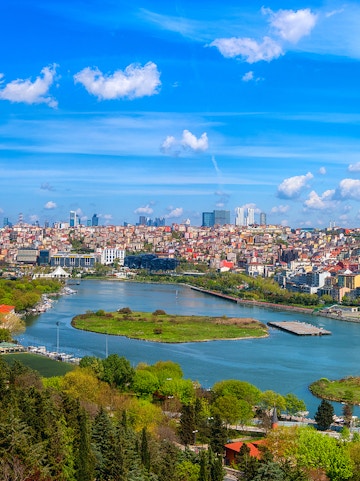
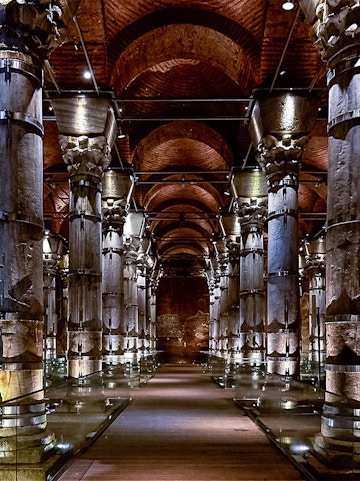
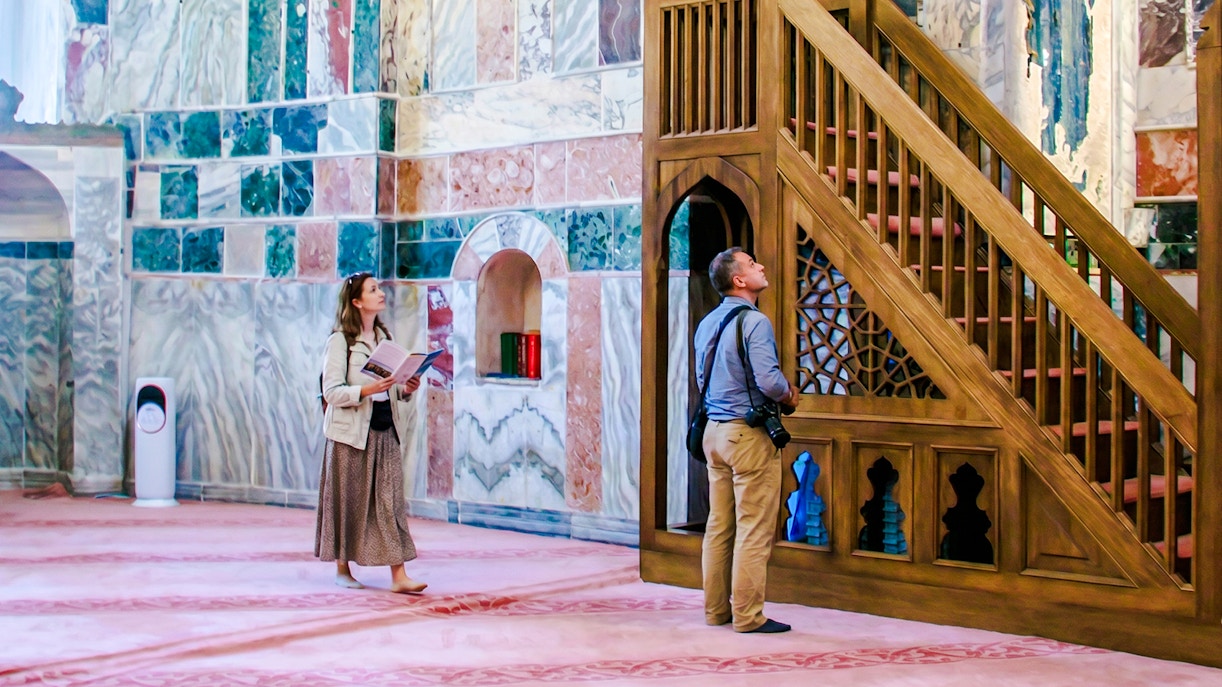
This western entrance hall introduces the late-Byzantine mosaic cycle, showing the genealogy of Christ and scenes from the life of the Virgin Mary. Visitors pass through its vaulted bays first, moving east from the courtyard into the quieter inner narthex.
Kariye Mosque Tickets
Crafted by Headout, a global experiences brand offering curated tours, tickets & experiences. Discover with ease, book with peace.Loved by over 56 million guests worldwide
Top things to do in Istanbul
How Headout makes choosing experiences effortless
We curate the best ways to experience
We research and organise all unique experiences - from tickets to tours to special combos - so you get all the choices without the clutter.
We partner with the best
Every supplier is vetted for quality, reliability, and value so you only get top rated experiences. No surprises, no disappointments.
All the best options, in one place
Each experience is thoughtfully organised to give you maximum availability, great value and an easy way to choose.
Book with complete peace of mind
Free cancellations, Flexible payments, and 24/7 support - thoughtfully designed for flexibility, assurance, and total peace of mind.
Slide 1 of 41/4
Slide 1 of 4
Quick overview
- Ticket option: Get an entry ticket to Kariye Mosque with an audio guide for historical insights.
- How you’ll explore: This is a self-paced visit, so you can move through the site independently.
- What matters most: The audio guide adds context for the mosaics, frescoes, and layered mosque-church history.
- Queue reality: Entry involves security checks and may be temporarily restricted during prayer times.
- Access can vary: Interior visibility and visitor flow may change with worship use and conservation needs.
- Best fit: Pick this if you want flexible timing and more context than a basic walk-through.
- Smart nudge: Check the latest visitor-access conditions before booking, especially if the mosaics are your main reason to visit.
- Best use of time: A short, focused visit works best, ideally paired with Fener–Balat or the city walls rather than a long stay.
What to expect at Kariye Mosque
1/6
Enter a layered monument
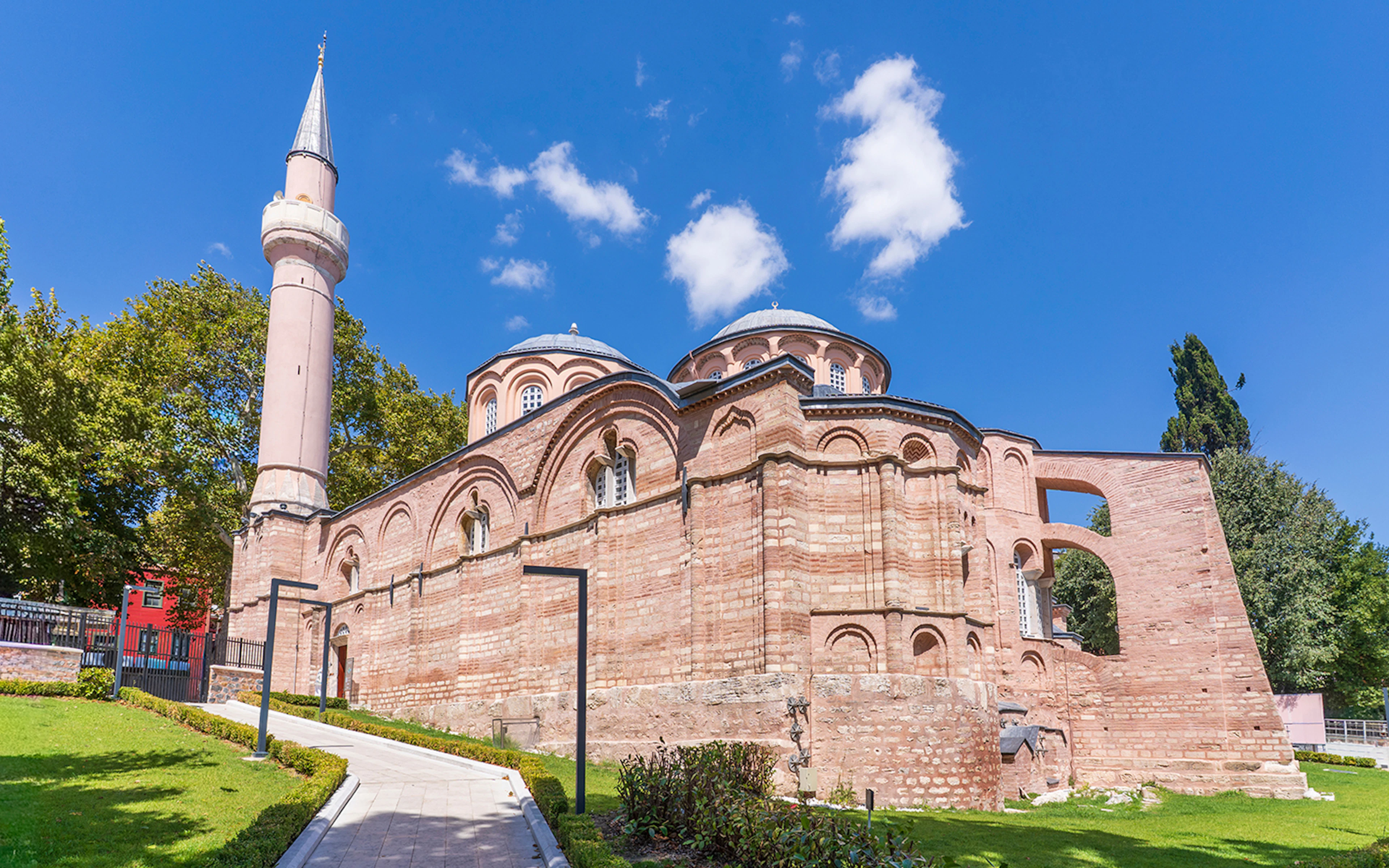
Step through the small courtyard into a compact 11th- to 14th-century complex, better known as Chora Church. The scale feels intimate from the start: brick walls, low domes, and a former monastic church later adapted into an active mosque.
Follow the mosaic-lined narthexes
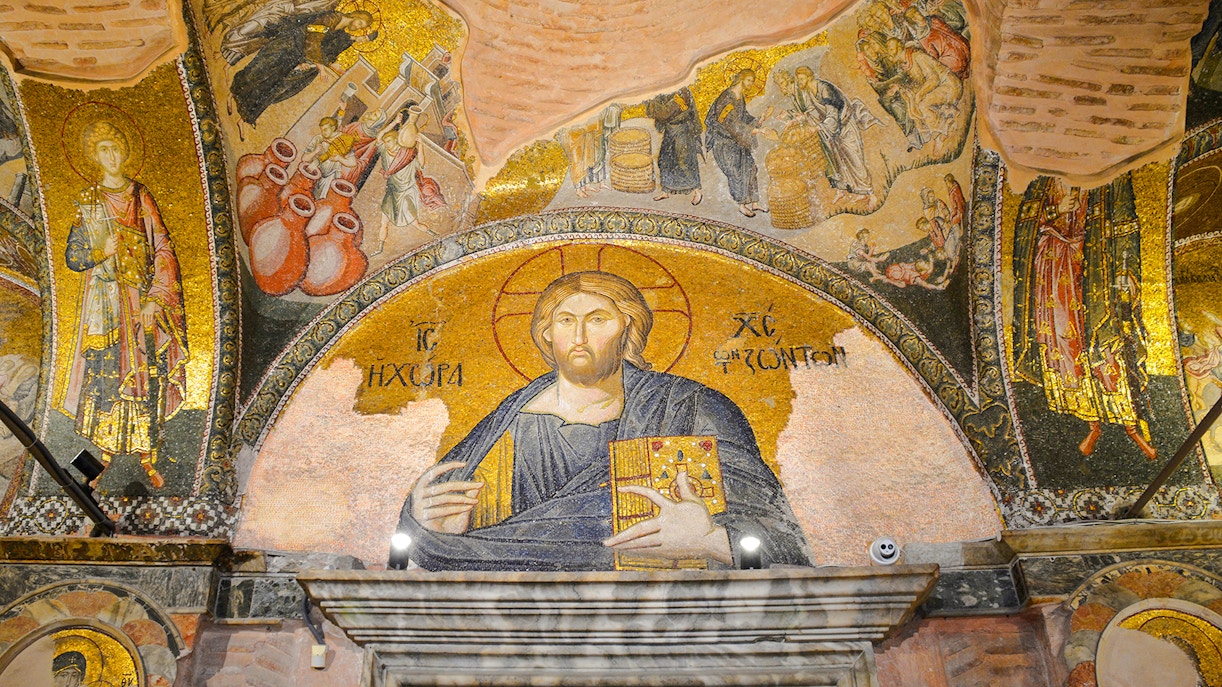
The route traditionally unfolds through the outer and inner narthexes, where late-Byzantine mosaics depicts the lives of the Virgin Mary and Christ. Look for Theodore Metochites kneeling before Christ, holding a miniature church, one of Kariye’s defining images.
Pause beneath the central dome
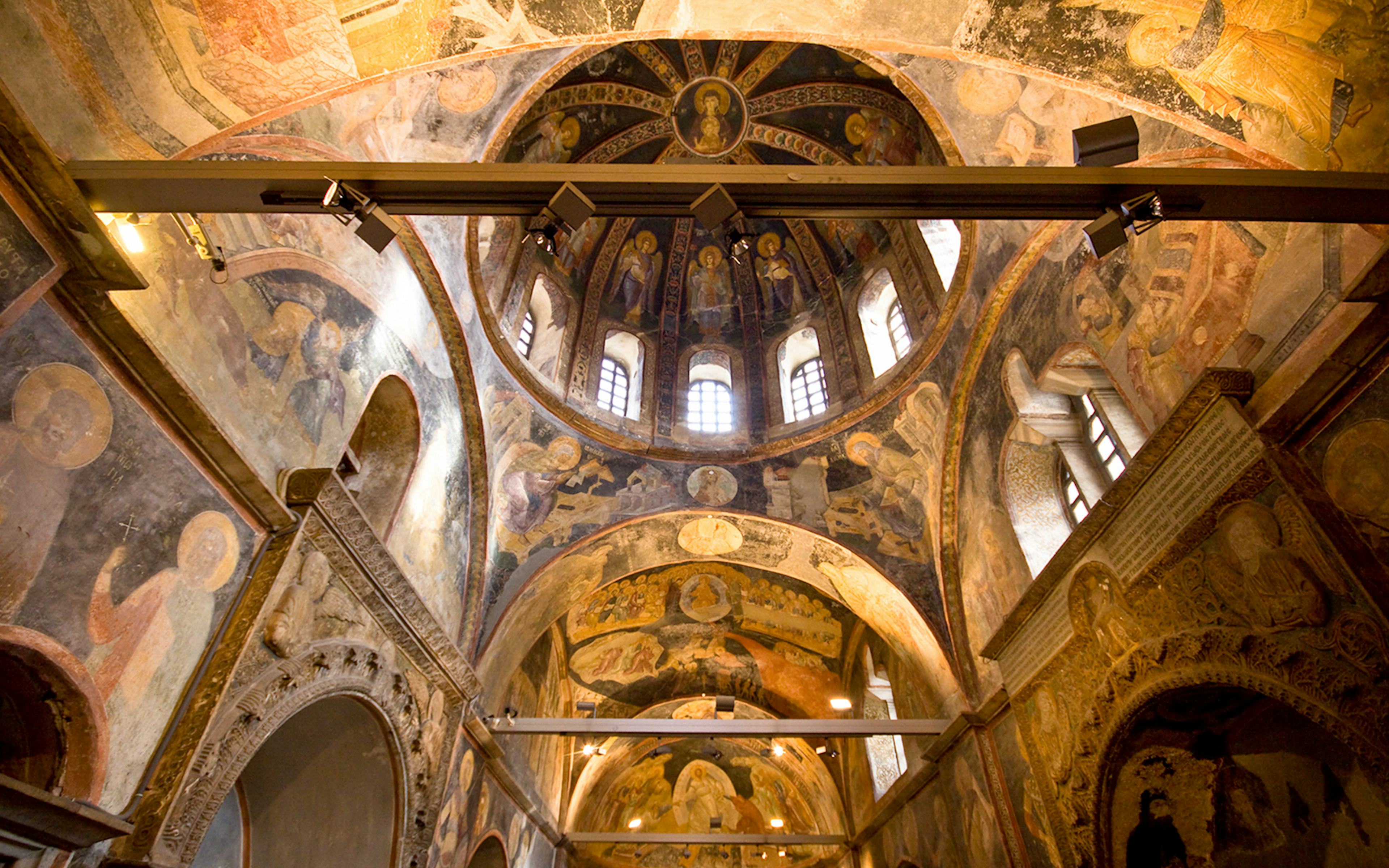
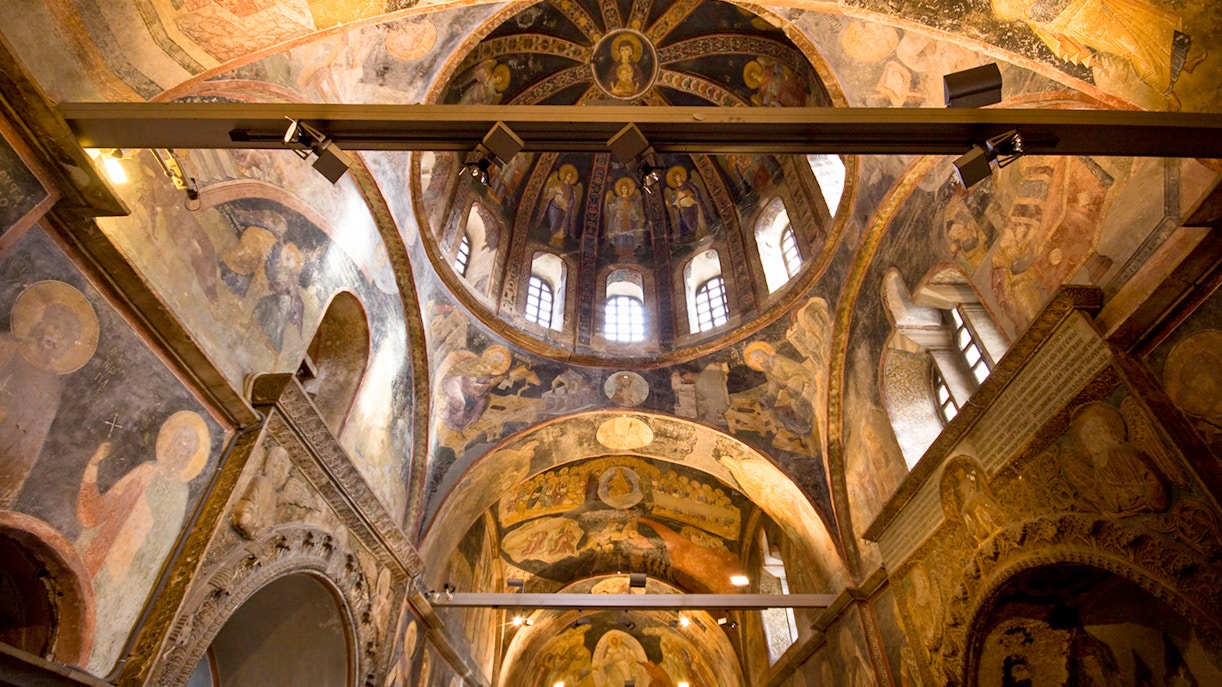
From there, your eye rises to the naos and its 7.5-meter central dome, where Christ Pantocrator appears amid a ring of 16 ancestors. Marble wall panels, arches, and the mosque’s later fittings reveal the building’s layered history.
The Anastasis in the parekklesion
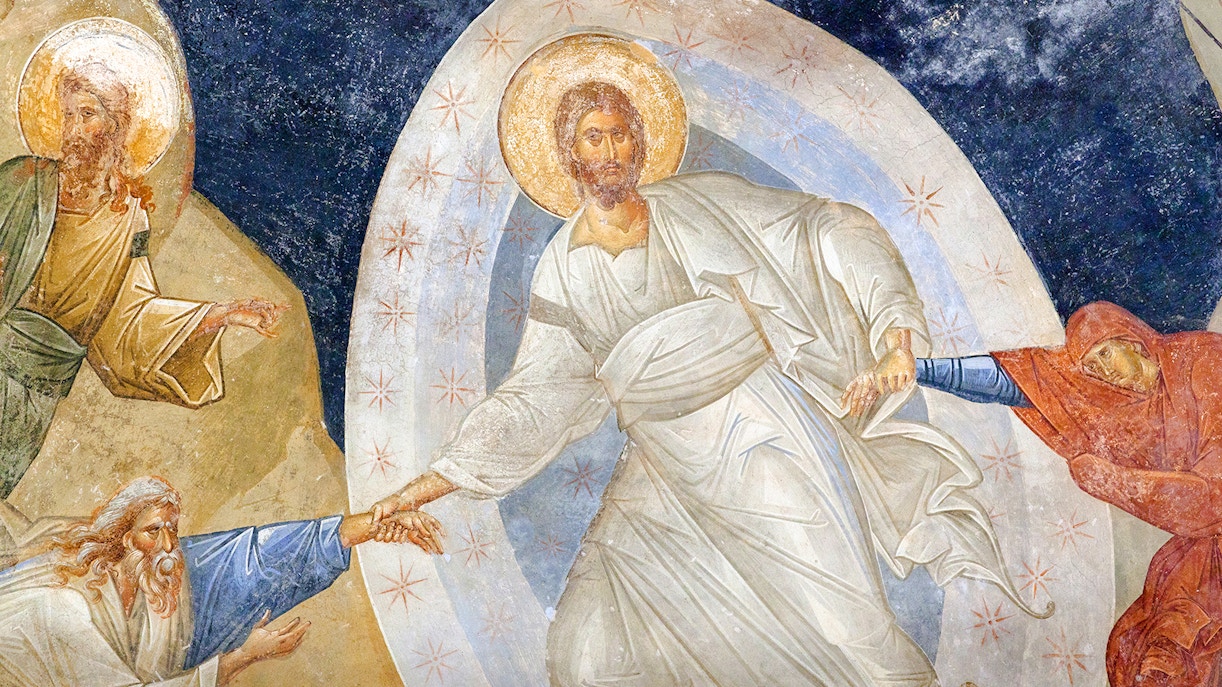
The emotional highlight is the parekklesion, a fresco-covered funerary chapel. When visible, the Anastasis depicts Christ pulling Adam and Eve from their tombs, while nearby Last Judgment scenes make this narrow side chapel Kariye’s most dramatic space.
Exit with added context
Most visits wrap up back in the courtyard, after a final look at the brick-and-stone façades and asymmetrical annexes. The included audio guide helps connect what you’ve seen, while skip-the-ticket-line entry leaves more time for art than queuing.
Keep exploring beyond Kariye
After visiting Kariye Mosque, you can continue exploring the surrounding Edirnekapı area. Nearby attractions include the historic Theodosian Walls and Tekfur Palace, which requires a separate ticket. Together, these sites help you experience more of the late Byzantine history connected to Kariye.
Things to know before booking your Kariye Mosque tickets
Booking window
Because access rules can shift with mosque use, Kariye Mosque is best booked only after you confirm the latest date-specific notes. Current tourist hours and standalone ticket rules remain variable across sources.
What’s included
The current offering is self-guided entry with an audio guide for on-site context. It does not include a live guide, hotel transfers, or guaranteed access to all mosaic and fresco areas.
Entrances & flow
Entry may pause for security screening, shoe removal, and prayer times. Some interior areas may also have restricted access.
Ways to explore
This audio-guided option is best if you prefer independent pacing with built-in context. Live guiding or transport services are not part of the current offering.
Policies & rules
Kariye Mosque is an active mosque, so modest clothing is required and women should carry a headscarf. Step-free access, full interior visibility, and other accessibility details are still unclear, so verify directly before booking.
Galleries at Kariye Mosque
Narrative Mosaic Corridor - Late Byzantine
Christ Cycle Mosaics - 14th Century
The long inner corridor continues the 14th-century mosaic cycle with scenes from Christ’s life and the Theodore Metochites panel. It sits between the outer narthex and naos, so most visits pause here before entering the main space.
Main Worship Hall - Byzantine Core
The naos is the central worship hall, now used as both a mosque interior and the former church core. Under the main dome, visitors first look upward, then move their gaze across the side aisles, marble panels, the mihrab, and the surviving mosaic areas.
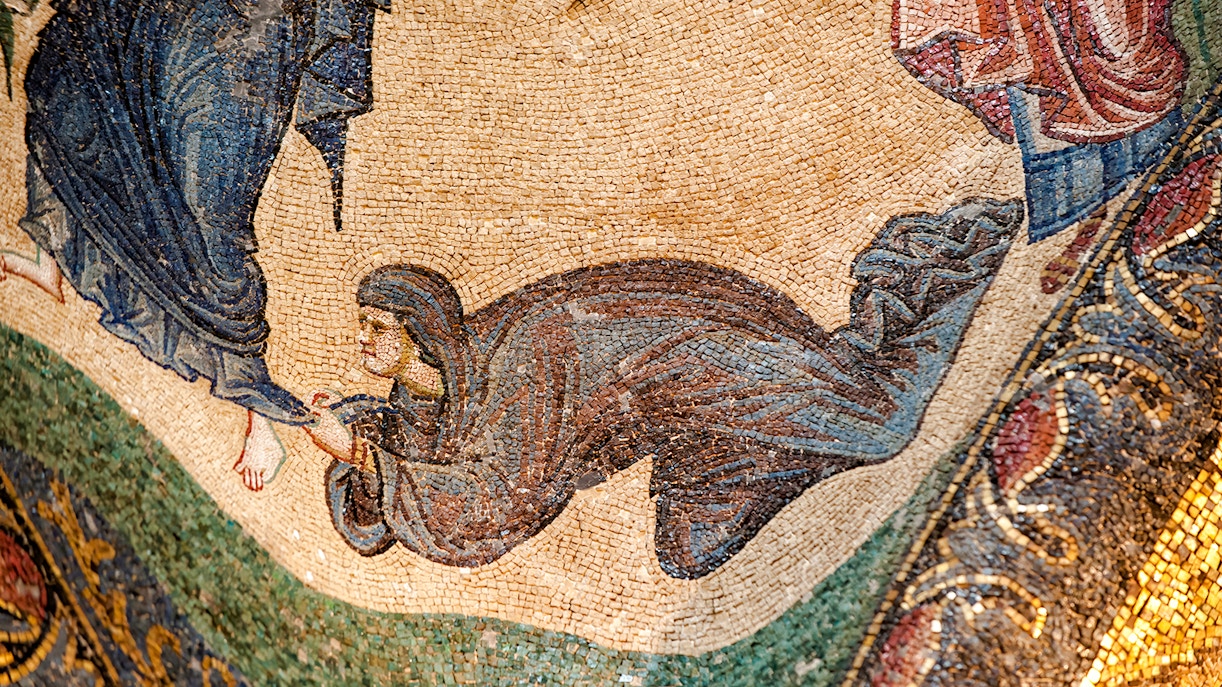
Funerary Chapel Frescoes - Late Byzantine
On the south side, this funerary chapel preserves Kariye’s best-known fresco cycle from the late Byzantine period. Enter through a narrower side opening, then follow the chapel eastward to see the Anastasis and Last Judgment compositions.
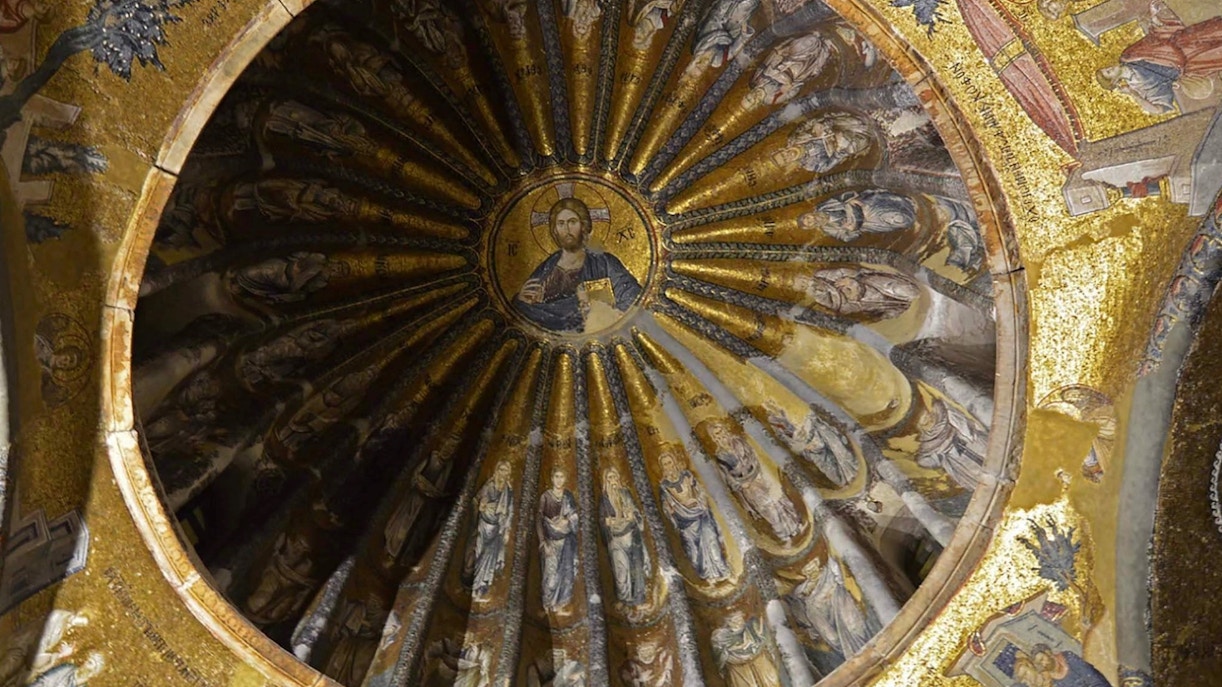
Overhead Mosaic Program - Byzantine Iconography
These overhead surfaces carry late-Byzantine mosaic imagery, including Christ Pantokrator and ancestral figures arranged around the domes. Look up in the naos and narthex bays, where the decoration links the entrance sequence to the central worship space.
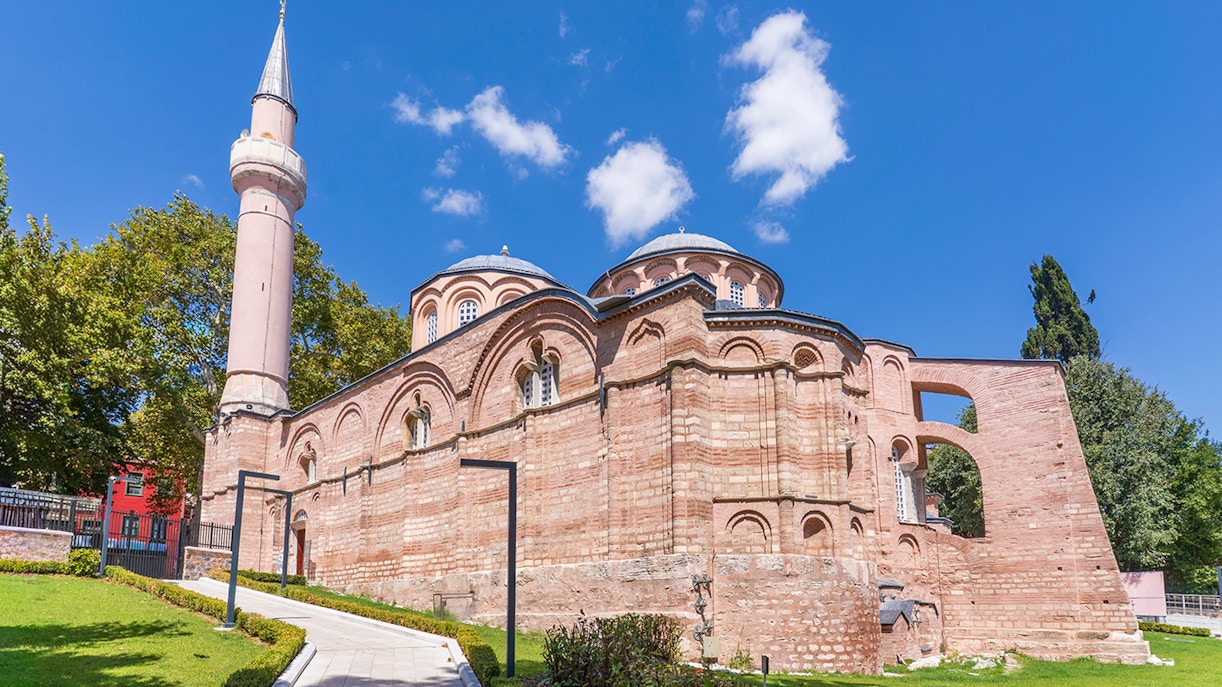
Entrance Sequence and Exterior Fabric - Byzantine Architecture
The small forecourt and surrounding facades frame the visit with brick-and-stone Byzantine masonry and later additions. Start here to read the building’s layered plan, then circle the outer walls before entering through the west-side courtyard approach.
What to see at Kariye Mosque
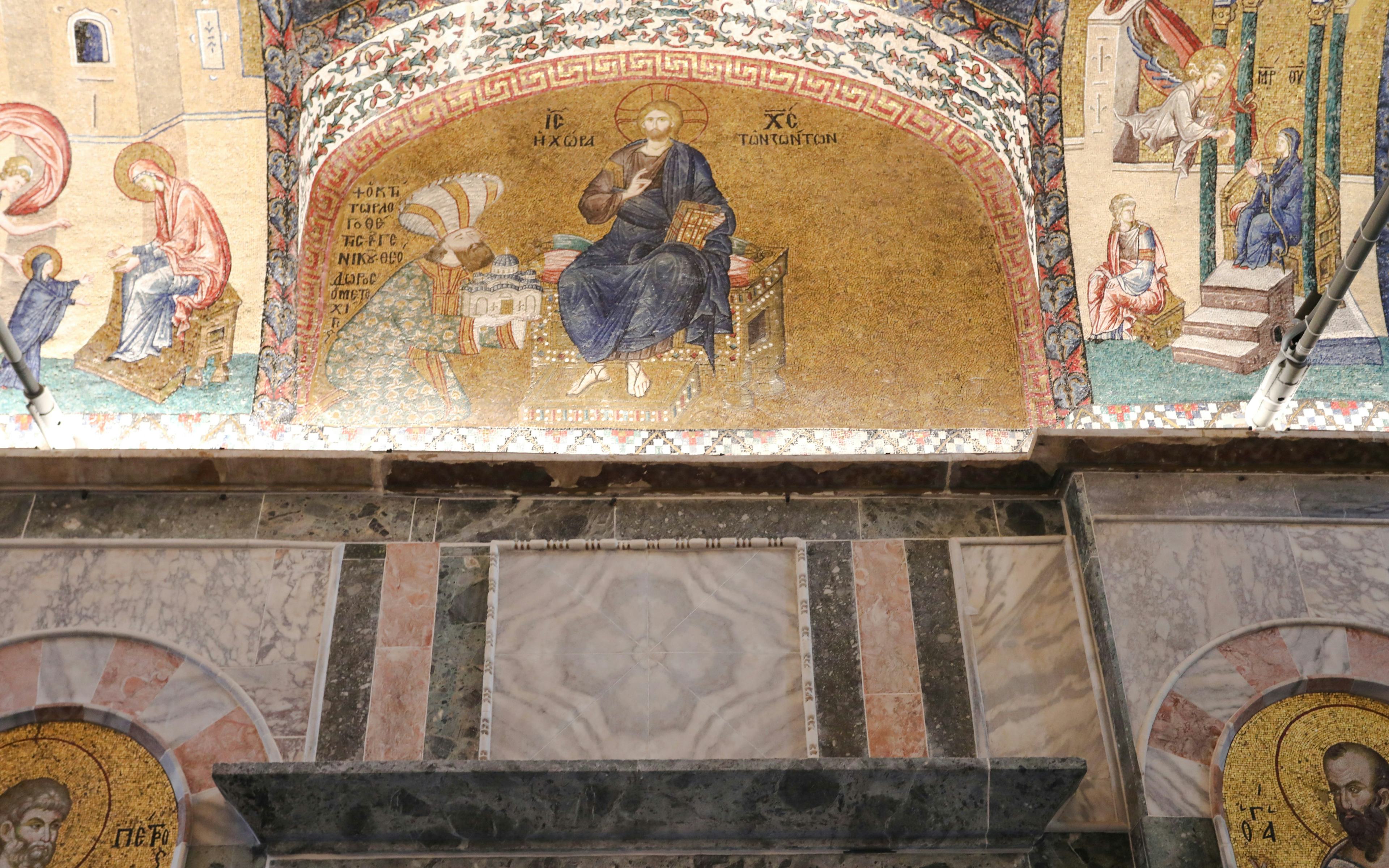
1/5
Theodore Metochites offering the church mosaic
In the inner narthex, this early 14th-century mosaic shows the scholar-statesman Theodore Metochites kneeling before Christ and presenting a model of the church. It is one of Byzantium’s most memorable donor portraits, linking artistic splendor, patronage, and devotion in a single image.
The Anastasis fresco
Painted in the parekklesion funerary chapel, the Anastasis shows Christ pulling Adam and Eve from their tombs. Its sweeping movement, shattered gates of Hell, and luminous whites make it Kariye’s most powerful image of redemption.
The Life of the Virgin mosaics
Across the outer and inner narthexes, these 14th-century mosaics narrate the Virgin Mary’s life through richly detailed scenes like her birth, presentation, and annunciation. On slow, close observation, you will be able to appreciate expressive faces, inscriptions, and shimmering gold tesserae.
The Christ Pantocrator dome
Look up into the central dome to see Christ Pantocrator encircled by ancestors in a radiant genealogical composition. The compact scale of Kariye becomes an advantage here, allowing you to study Byzantine theology and craftsmanship from close range.
The Last Judgment frescoes
Along the parekklesion walls and vaults, the Last Judgment frescoes fill the chapel with angels, rising souls, and rivers of fire. Their energy and detail show why Kariye is considered one of the last great flowerings of Byzantine art.
Plan your visit to Kariye Mosque
- Reported visitor hours: Tourist visits are commonly reported from 9am to 6pm, Saturdays to Thursdays.
- Last entry: Last tourist entry is commonly reported as 5:30pm.
- Friday access: Fridays are generally reserved for worship, not tourist visits.
- Prayer breaks: Tourist access pauses around daily prayer times, and exact timings vary.
- Closures: Access can change during religious holidays, restoration, or special services.
Best time to visit
- Best hours: Visit early morning or late afternoon, outside prayer windows.
- Best days: Saturdays to Thursdays are better than Fridays for tourist access.
- Best months: April to May and September to October are most comfortable for walking nearby streets.
- Crowd tip: Midday can be busier and more likely to overlap with prayer breaks.
- Address: Derviş Ali, Kariye Camii Sok. No:18, 34087 Fatih/İstanbul, Türkiye.
- Map: View on Google Maps.
- Area: The mosque sits in Edirnekapı, inside Istanbul’s historic land walls.
- Restrooms: A small courtyard restroom is reported, but public access may not always be available.
- Lockers: No confirmed locker or cloakroom facilities.
- Seating: Limited seating inside, depending on the current worship setup.
- Parking: No dedicated parking, and nearby street parking is limited.
- Food outlets: No clearly available on-site food or drink facilities.
- Signage: On-site interpretation can be limited, so bringing a map or audio guide is recommended.
- Approach: The street slopes slightly, and pavements can be uneven near the courtyard entrance.
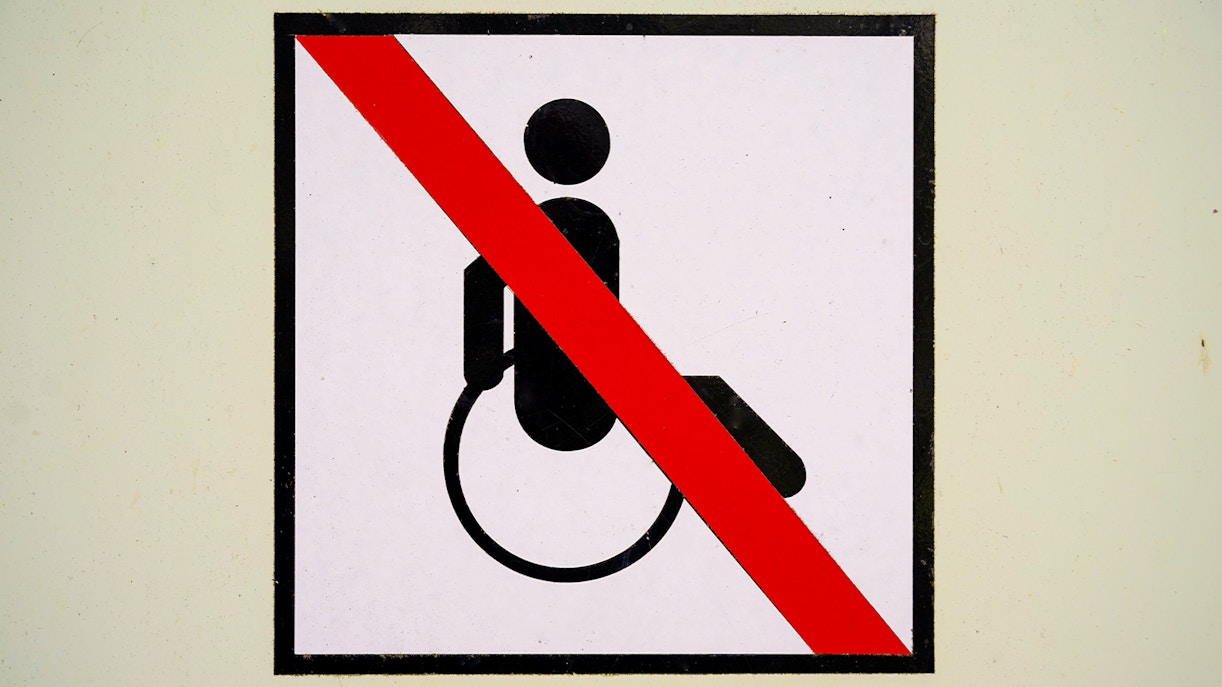
- Step-free access: A verified step-free route is not specified.
- Inside: People using wheelchairs may face steps, narrow passages, and uneven historic flooring.
- Entry-level access: Visitors with limited mobility may still access some entry-level areas, depending on current setup.
- Elevators: Elevators are not indicated for visitors.
- Support services: Wheelchair loans, Braille, and hearing support are not confirmed.

- Clothing: Shoulders and knees must be covered before entry.
- Head covering: Women are expected to cover their hair inside.
- Footwear: Shoes must be removed before entering the prayer hall.
- What to avoid: Avoid sleeveless tops, short shorts, and transparent clothing.
- Tip: Bring a light scarf, because spare coverings may not always be available.

- Bags: Expect security checks, and avoid bringing large luggage or bulky backpacks.
- Photography: Non-flash photography is generally allowed unless staff or signage say otherwise.
- Food and drinks: Food and drinks are not clearly permitted inside, so finish them before entry.
- Behavior: Keep voices low and never walk in front of people praying.
- Prayer times: Some areas may close before, during, and after prayers.
- Re-entry: The policy is not clearly stated, so check with staff before leaving.
Tips & guidelines
- Start in the outer narthex: It’s usually the clearest first read of Kariye’s mosaic storytelling.
- Save the parekklesion for last: The Anastasis fresco lands harder after the narthex narrative sequence.
- Go early in the day: The 100-visitor cap keeps interiors quieter and sightlines cleaner.
- Avoid Friday visits: Tourist access is tight or unavailable, and prayer use takes priority.
- Pair Kariye with Balat downhill: Visit the mosque first, then walk toward Fener–Balat more easily.
- Bring offline maps: Edirnekapı streets feel residential and signage around Kariye can be patchy.
- Look up in the domes slowly: Small-scale ceiling mosaics reward a full pause, not a quick scan.
- Step outside after the visit: The nearby Theodosian Walls add context if interior access feels limited.
Frequently asked questions about Kariye Mosque tickets
Not always, but it helps if you want pre-arranged entry with an audio guide. Access rules can change, so booking ahead reduces uncertainty.
Yes, Kariye Mosque is the current name for the former Chora Church, with access rules reflecting its status as an active mosque.
Opening hours can vary due to mosque operations, prayer times, and restoration work. Tourist access may pause during worship, particularly on Fridays around midday.
Viewing them is a key attraction, but access can vary. Check the latest conditions before visiting as mosque activities and restoration efforts can affect visibility.
Yes, pre-booked entry includes an audio guide, allowing for independent exploration with added context.
Yes, respectful non-Muslim visitors are generally welcome outside prayer times, though some areas or time windows may be restricted during worship.
Ensure your clothing covers shoulders and knees, and women should bring a headscarf. Shoes must be removed before entering prayer areas.
Accessibility is limited and not clearly documented. Expect slopes outside and possible steps inside, so travelers with mobility needs should check the latest details.
Plan for about 45–90 minutes, depending on the extent of interior access and your interest in the mosaics and frescoes.
